Piano Tuner Bern · Professional Piano Tuning for Upright and Grand Pianos
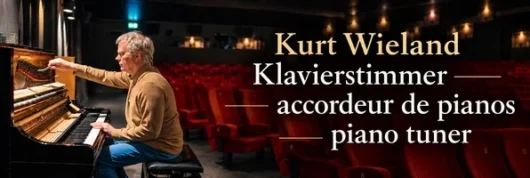
Kurt Wieland tunes pianos in Bern and many other regions of Switzerland – in private homes, public institutions, recording studios and concert venues. Once tuned, your instrument regains its clear, harmonious and balanced sound. You can once again enjoy playing the piano without distraction or use your instrument in a concert.

Kurt Wieland · Piano Tuner Bern
Berchtoldstrasse 48 · 3012 Bern
077 407 02 36 · qrtwie@gmail.com
Opening hours: Mon–Sat 8 am–8 pm
Piano tuning in 2–2.5 hours
Flat rate: CHF 250.–
→ Contact the piano tuner
Piano Tuning and Maintenance Services
Upright and Grand Piano Tuning
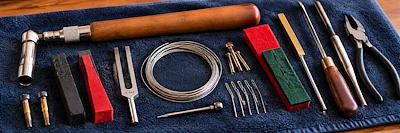
As a professional piano tuner with over 35 years of experience, I tune upright and grand pianos of all makes, whether in private homes, music schools or concert venues. I take into account the individual characteristics of each instrument as well as your personal preferences. Careful tuning helps restore a clear, balanced sound and achieve the best possible tuning stability, making your piano more enjoyable to play.
Concert and Recording Studio Tuning
As an experienced piano tuner, I provide professional tuning for concerts, studio recordings and other musical events, taking into account the requirements of each performance. Pianos are generally tuned shortly before a concert to ensure that they are in the best possible condition for the musicians.
For longer concerts or when an instrument is played particularly intensively, additional tuning during a break may be useful. I can also adjust the concert pitch to the required frequency, such as A4 = 440 Hz or 442 Hz.
References from My Work as a Piano Tuner
My references include jazz pianist Michel Camilo, whose grand piano I tuned during his performances at Marians Jazzroom, as well as musician and producer Timo Loosli (Faux Tales).
I have also gained experience in concert piano tuning through regular assignments at Collège de Gambach in Fribourg and Schloss Ueberstorf. I also tune pianos in various theatres, hotels and other performance venues.
Minor Repairs and Adjustments
As a piano tuner, I also carry out minor repairs and adjustments on upright and grand pianos. These include freeing sticking keys, eliminating certain unwanted noises and making small adjustments to the action. I can also adjust the pedals and check that they are working properly.
Many of these tasks can be completed on site and combined with a regular tuning appointment. If more extensive repairs are needed, I can assess the condition of your instrument and discuss the available options with you.
Piano Assessments and Advice
As an experienced piano tuner, I assess the condition, quality and current value of upright and grand pianos. On request, I can provide a detailed assessment outlining the instrument’s main characteristics.
I am also happy to advise you when buying or selling a piano, including whether repairs or restoration would be worthwhile. In addition, I offer practical advice on maintaining your instrument and preserving its condition over time.
Equal Temperament, Stretch Tuning and Tuning Stability
Upright and grand pianos are tuned using equal temperament, allowing music to be played in all keys. Through stretch tuning, the lower notes are tuned slightly lower and the higher notes slightly higher to achieve a harmonious and balanced sound.
To ensure tuning stability, I tune the instrument in several passes. Severely out-of-tune instruments may require additional tuning passes.
You can discover more about piano tuning techniques and their theoretical principles in German or French.
Piano Tuning in Bern and Other Regions of Switzerland
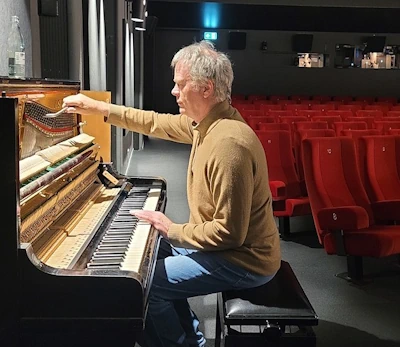
As a professional piano tuner based in Bern, I regularly visit customers throughout the surrounding region and many other parts of Switzerland. I tune upright and grand pianos in private homes, music schools, concert venues and other locations.
Select a region below to see some of the towns and areas where I offer my services.
Bern and Surrounding Areas
I regularly tune pianos in Bern, Köniz, Ostermundigen, Zollikofen, Bümpliz, Muri-Gümligen, Worb, Belp, Kehrsatz, Laupen, Münchenbuchsee and Jegenstorf.
Emmental & Oberaargau
Regular appointments are available in Langnau, Burgdorf, Sumiswald, Hasle-Rüegsau, Lützelflüh, Kirchberg, Langenthal and Herzogenbuchsee.
Fribourg and the Lake Murten Region
I also regularly visit Fribourg, Düdingen, Marly, Romont, Kerzers and Murten, as well as other communities around Lake Murten.
Biel, Seeland and Solothurn
Piano tuning appointments are available in Biel/Bienne, Lyss, Aarberg, Ins, Erlach, throughout the Seeland region and in Solothurn.
Bernese Oberland
I tune upright and grand pianos in Thun, Spiez, Interlaken, Wilderswil, Grindelwald, Adelboden, Frutigen and Zweisimmen.
Central Switzerland & Aargau
I also offer piano tuning in Lucerne, Entlebuch, Sursee, Zofingen and Olten.
Neuchâtel Region
Appointments are available in Neuchâtel, La Chaux-de-Fonds, Le Locle, Cortaillod, Boudry and Saint-Blaise, as well as in surrounding communities.
Other Regions on Request
As a piano tuner, I also travel to more distant locations, such as Saanen, Gstaad, Visp, Brig and Naters. Appointments in other regions can be arranged on request.

About Kurt Wieland – Piano Tuner Since 1990
My interest in piano tuning began when I was a teenager. I regularly played the piano at home and was bothered when it went out of tune. Since my parents were understandably reluctant to call a piano tuner too often, I decided to learn how to tune it myself.
I bought the necessary tools and began experimenting, gradually developing my skills through practice and careful listening. Before long, I was also tuning pianos for friends and acquaintances. Later, I gained further practical experience during a placement at a piano workshop in Bern, where I learned more about piano construction, maintenance and repair.
I have worked professionally as a piano tuner since 1990, serving private customers, music schools, concert venues and other institutions in Bern and many other regions of Switzerland. Over the years, I have tuned a wide variety of instruments, from older upright pianos to modern concert grands.
Musical Background and Professional Experience
I grew up in the Bern and Murten regions and studied German language and literature, French, musicology and education at the University of Fribourg. My musical training included classical piano studies at the Fribourg Conservatory, followed by further studies in jazz and popular music.
My professional experience includes tuning for the internationally renowned jazz pianist Michel Camilo during a week of performances at Marians Jazzroom in Bern. I was responsible for tuning his concert grand piano before the first concert each evening and again during the interval between performances.
Working with different instruments and musicians has strengthened my appreciation of the relationship between precise tuning, the individual characteristics of a piano and the musical expectations of the person playing it.
Piano Lessons and Private Tuition
Alongside my work as a piano tuner, I have been offering private lessons in Bern since 1990. I teach piano, German, French, English and mathematics to children, teenagers and adults.
My piano lessons take place in Bern’s Länggasse district and are suitable for beginners, returning players and more advanced students.
→ Find out more about my piano lessons
Concert Piano Tuning – Is It Different from Regular Piano Tuning?
Not fundamentally. As a piano tuner, I apply the same basic tuning principles whether I work on an upright or grand piano in a private home, a concert hall, an outdoor venue or a recording studio. My aim is always to achieve an accurate, balanced and stable tuning, taking into account the individual characteristics of each instrument.
The main differences concern the instruments themselves and the conditions in which they are played. The size and construction of the piano, the acoustics of the room and, during concerts, the presence of an audience can all influence how the instrument sounds.
Concert tuning may also place additional demands on the piano tuner’s schedule. A piano is often tuned shortly before a performance, and further adjustments may be useful during a break or between concerts, particularly when the instrument is played intensively.
I also take into account the required concert pitch. While A4 = 440 Hz is commonly used, some orchestras and ensembles prefer A4 = 442 Hz.
Experience with Concert and Event Tuning
In addition to my work with jazz pianist Michel Camilo at Marians Jazzroom in Bern, I have worked as a piano tuner for concerts and musical events in a variety of settings, including concert halls, theatres, hotels and educational institutions.
I also regularly tune the upright piano in the auditorium of the Collège de Gambach in Fribourg, where it is used for student concerts.
Whether an instrument is played by a professional musician or a student, I approach each tuning with the same care and attention to detail.

Customer Testimonials
Customer satisfaction is very important to me. Here are two testimonials from people who have used my piano tuning services.
“I am fortunate to own an 80-year-old Steinway grand piano, whose entire interior (apart from the soundboard) was rebuilt around thirty years ago by highly respected specialists in Bern. For almost two years, Kurt Wieland has maintained the exceptional expressive power of this venerable instrument. With every visit, he restores a richness and fullness of sound that is hard to match – combining the professionalism of a musician and a craftsman across seven octaves and far beyond!”
— Hannes Thommen, Bern · August 2025
“For several years, I have regularly called on Kurt Wieland to tune the pianos at the residential care facility where I work. I appreciate not only the quality of his work, but also his availability, responsiveness and calm, respectful manner towards both staff and residents.”
— Nico Meier
You can find further customer feedback in my Google reviews.

Piano Care – Five Practical Tips
Proper care helps keep your upright or grand piano in good condition for many years. Here are five practical tips from an experienced piano tuner to help protect your instrument and extend its lifespan.
Maintain a Stable Indoor Climate
A relative humidity level of 40–60% is recommended. Avoid major fluctuations, as the wood, soundboard and action are sensitive to changes in temperature and humidity.
Choose a Suitable Location
Avoid placing your upright or grand piano close to radiators, fireplaces or other sources of heat. Protect it from direct sunlight and draughts. Keeping the indoor climate as stable as possible helps preserve the instrument over time.
Clean the Keys and Cabinet Gently
Regularly remove dust using a soft, clean cloth. Avoid harsh cleaning products and abrasive materials. For delicate polished surfaces, yellowed keys or stubborn stains, it is best to seek professional advice.
Have Your Piano Tuned Regularly
Have your upright or grand piano tuned by an experienced piano tuner at least once a year. After moving a piano or receiving a new instrument, allow it time to adjust to the climate of its new location. It is generally advisable to wait at least one week before having it tuned.
Address Repairs Promptly
Unusual noises, sticking keys, pedal problems or an uneven keyboard response may indicate that adjustments or repairs are needed. Consulting a piano tuner early can sometimes help prevent more serious damage.
FAQ – Piano Tuning Bern
Can a piano be tuned at any time of year?
Yes. Upright and grand pianos can be tuned at any time of year. There is no particular season that is better suited to piano tuning.
Changes in temperature and humidity can affect the instrument and its tuning stability, but they do not change the fundamental tuning technique. Maintaining a reasonably stable indoor climate is therefore more important than choosing a particular time of year for your tuning appointment.
Do I need to prepare my piano before your visit?
No special preparation is necessary. Please make sure the piano is easily accessible and that any objects placed on top of it can be removed before the piano tuner begins working.
A quiet environment is helpful, as I need to listen carefully to individual notes and the interaction between strings. You do not need to be present throughout the appointment, although it is useful if you are available at the beginning to discuss any particular concerns or requests.
What pitch should my piano be tuned to?
In most cases, I recommend keeping your piano at its current pitch to achieve the best possible tuning stability. Raising the pitch unnecessarily places additional tension on the strings and may make the tuning less stable.
However, if you plan to use your piano for recordings or to play alongside instruments tuned to A4 = 440 Hz, raising it to this standard pitch may be advisable.
If a significant pitch adjustment is necessary, a second tuning session may be required to fine-tune the instrument and achieve a more stable result.
Another option is to raise the pitch gradually over several years, increasing it by approximately 1–2 Hz at each annual tuning appointment until the desired pitch of 440 Hz is reached. This allows the adjustment to be spread over several sessions rather than making a large change all at once.
Why does a piano go out of tune?
Over time, an upright or grand piano gradually loses its tuning stability. Changes in humidity affect the wooden components of the instrument, particularly the soundboard, causing variations in string tension and pitch. Long-term settling and relaxation processes may also contribute to a gradual lowering of the overall pitch.
Pianos that have not been tuned for many years are often noticeably below the standard pitch of A4 = 440 Hz. At the same time, different groups of notes may have shifted by different amounts, disturbing the balance of the tuning across the keyboard.
In addition, most piano notes are produced by two or three strings tuned to the same pitch. When these strings drift apart, audible beats develop and the notes lose their clarity.
A thorough piano tuning therefore involves more than adjusting individual strings. It also requires restoring the relationships between notes and registers to achieve a balanced and harmonious sound.
Do you tune pianos by ear or use tuning software?
I use professional piano tuning software together with careful listening. The software helps me determine a tuning curve suited to the individual characteristics of each upright or grand piano and provides precise reference pitches for the notes across the keyboard.
However, the software does not replace the piano tuner’s ear. I listen carefully to the strings of each note, check the octaves and make final adjustments to achieve a clear, balanced and musically satisfying result.
Can old pianos still be tuned?
Yes. An experienced piano tuner can often tune older upright and grand pianos successfully, even if they are 60, 80 or more than 100 years old. The age of an instrument alone does not determine whether it can be tuned.
What matters most is its condition, particularly the stability of the tuning pins, the strings, the soundboard and the overall structure. Some older instruments can still be tuned to A4 = 440 Hz, while others are better kept at a lower pitch to avoid unnecessary strain.
If a piano has not been tuned for many years, I assess its condition before deciding how best to proceed. In some cases, repairs may be necessary before a stable tuning can be achieved.
Can you determine the age of my piano?
Yes, in many cases. Most upright and grand pianos have a serial number that can be used to estimate their year of manufacture. By comparing this number with the manufacturer’s production records, I can often determine the age of the instrument quite accurately.
If the serial number is missing or the manufacturer’s records are unavailable, certain construction details may provide clues to the piano’s approximate age.
Do you also tune harpsichords and fortepianos?
Yes. In addition to upright and grand pianos, I also tune harpsichords and fortepianos. These historical keyboard instruments differ from modern pianos in their construction, tuning systems and technical requirements.
Depending on the instrument and the music being performed, I can tune them to different pitches and historical temperaments. I take into account the instrument’s construction, condition and the preferences of the musician.
Do you provide piano transport services?
No, I do not transport upright or grand pianos myself. I concentrate on my work as a professional piano tuner and recommend using a specialised piano moving company for transport.
After moving your piano, it is generally advisable to wait at least one week before having it tuned. This allows the instrument to adjust to the temperature and humidity of its new surroundings.
My piano sounds too loud in my room. What can I do?
The perceived volume of an upright or grand piano depends not only on the instrument itself but also on the acoustics of the room. Hard surfaces such as bare walls, tiled floors and large windows reflect sound, while carpets, curtains and upholstered furniture can help absorb it.
The way you use the pedals can also make a difference. On a grand piano, the left pedal (una corda) shifts the action slightly to one side, changing the tone and often reducing its volume. On an upright piano, the left pedal generally moves the hammers closer to the strings, allowing a softer attack.
If your piano still sounds excessively loud, I can assess whether adjustments to the instrument or changes to the room acoustics might help.
Contact Your Piano Tuner in Bern
Are you looking for an experienced piano tuner or would you like advice about your upright or grand piano? I will be happy to advise you and discuss your requirements.
You can contact me by phone or email to arrange an appointment in Bern or any of the other regions where I offer my services.
Kurt Wieland – Piano Tuner
Phone: 077 407 02 36
Email: qrtwie@gmail.com